
Melatonin: Much More Than a Sleep Hormone

A Functional Medicine Perspective
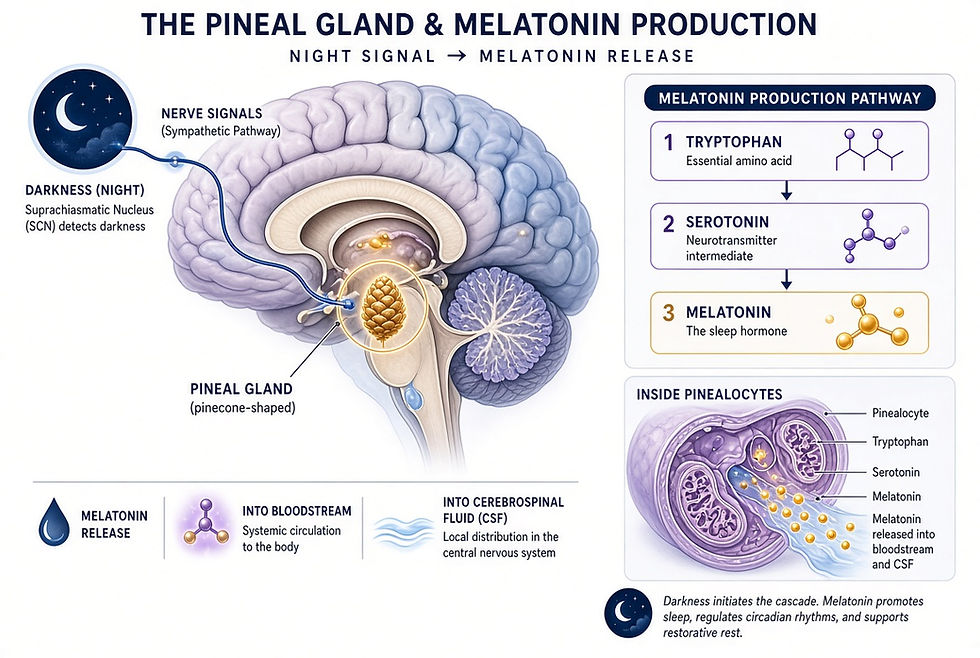
Melatonin is widely known as the “sleep hormone,” but this view is incomplete. In functional medicine, we recognize melatonin as a powerful, multi-system signaling molecule with roles far beyond helping you fall asleep. It supports cellular protection, immune balance, gut health, mitochondrial function, and healthy circadian rhythms throughout the body.
What Is Melatonin?
Melatonin (N-acetyl-5-methoxytryptamine) is a hormone primarily produced by the pineal gland in the brain. It is also synthesized in other tissues, including the gastrointestinal tract, where it exerts local protective effects. Its levels naturally rise in the evening in response to darkness and fall in the morning with light exposure, helping coordinate the body’s internal clocks.
How Your Body Makes Melatonin
Production starts with the amino acid tryptophan (from dietary protein). The pathway is:
Tryptophan → 5-hydroxytryptophan (5-HTP) → serotonin → N-acetylserotonin → melatonin.
The rate-limiting step (converting serotonin to N-acetylserotonin via the enzyme AANAT) is tightly controlled by the light-dark cycle. Light signals from the eyes reach the brain’s master clock (the suprachiasmatic nucleus). Darkness allows the sympathetic nervous system to release norepinephrine onto the pineal gland, ramping up melatonin production. Exposure to light—especially blue light from screens—suppresses this process.
Nutrients that support the pathway include adequate protein (tryptophan), B vitamins, magnesium, and zinc. Chronic stress, inflammation, and nutrient shortfalls can impair production.
Why Melatonin Levels Often Decline and Why Support Can Help
Natural melatonin production peaks in childhood and adolescence, then gradually declines with age—often becoming noticeably lower after the 40s or 50s. Modern life accelerates this: evening artificial light, irregular sleep schedules, shift work, jet lag, chronic stress, and poor diet all blunt the natural nighttime rise.
From a functional medicine viewpoint, optimizing melatonin is about more than sleep. Low levels are associated with greater oxidative stress, disrupted circadian signaling, and reduced cellular resilience. Supporting melatonin can help restore better rhythm alignment and provide systemic protection, particularly when lifestyle factors or age make endogenous production insufficient.
Benefits Beyond Sleep
Research and clinical observation highlight several key roles:
Antioxidant and mitochondrial support: Melatonin is a potent free-radical scavenger and stimulates the body’s own antioxidant enzymes (such as superoxide dismutase and glutathione peroxidase). It easily crosses cell and mitochondrial membranes, helping protect energy-producing mitochondria from damage.
Anti-inflammatory and immune modulation: It helps regulate inflammatory signaling (including pathways like NF-κB) and supports balanced immune responses.
Gut health: Melatonin produced in and acting on the gastrointestinal tract helps maintain barrier integrity, modulates local inflammation, influences motility, and interacts with the gut microbiome.
Metabolic and cardiovascular effects: It contributes to healthy blood pressure regulation, glucose metabolism, and overall circadian coordination of metabolic processes.
Neuroprotection and healthy aging: By reducing oxidative stress and supporting mitochondrial function, it has been studied for its role in brain health and cellular longevity.
These effects are interconnected. Better circadian alignment from melatonin often improves sleep, which further supports immune function, metabolic health, and recovery.
Functional Medicine Approach: Lifestyle First, Then Targeted Support
We prioritize restoring natural production before or alongside supplementation:
Get bright natural light exposure in the morning and limit blue light in the evening (use night modes, blue-blocking glasses, or dim lighting after sunset).
Maintain a consistent sleep-wake schedule.
Prioritize protein-rich meals (including tryptophan sources such as poultry, eggs, nuts, seeds, and dairy) and ensure adequate B vitamins, magnesium, and zinc.
Manage stress and inflammation through movement, nutrient-dense eating, and recovery practices.
Keep the bedroom cool, dark, and quiet.
When supplementation is appropriate (for example, with age-related decline, shift work, jet lag, or documented low levels), low physiological doses are often preferred to mimic natural patterns. Typical starting ranges discussed in clinical practice are 0.3–1 mg taken 30–60 minutes before the desired bedtime; some individuals benefit from slightly higher amounts under guidance. Choose high-quality, third-party tested products. Immediate-release forms are common; extended-release may be considered in specific cases.
Important: Melatonin can interact with certain medications (including blood thinners and immunosuppressants) and is not appropriate for everyone (for example, during pregnancy or in some autoimmune conditions). Work with a knowledgeable practitioner for personalized dosing and monitoring.
Key Takeaway
Melatonin is a foundational hormone for circadian health and cellular resilience. Addressing light exposure, nutrition, and lifestyle factors often restores better natural production. When additional support is needed, thoughtful, low-dose supplementation can provide benefits well beyond sleep—supporting antioxidant defenses, gut integrity, immune balance, and overall vitality.
This information is for educational purposes only and is not a substitute for personalized medical advice. Always consult your healthcare provider before starting any supplement.


Comments